Projects

Projects are ordered to support my current research direction first: computational neuroscience, cognitive neuroscience, Neuro-AI, applied machine learning, and then the robotics/control and systems work that built the technical base.

Neuroscience / Signals

Neuroscience / Signals

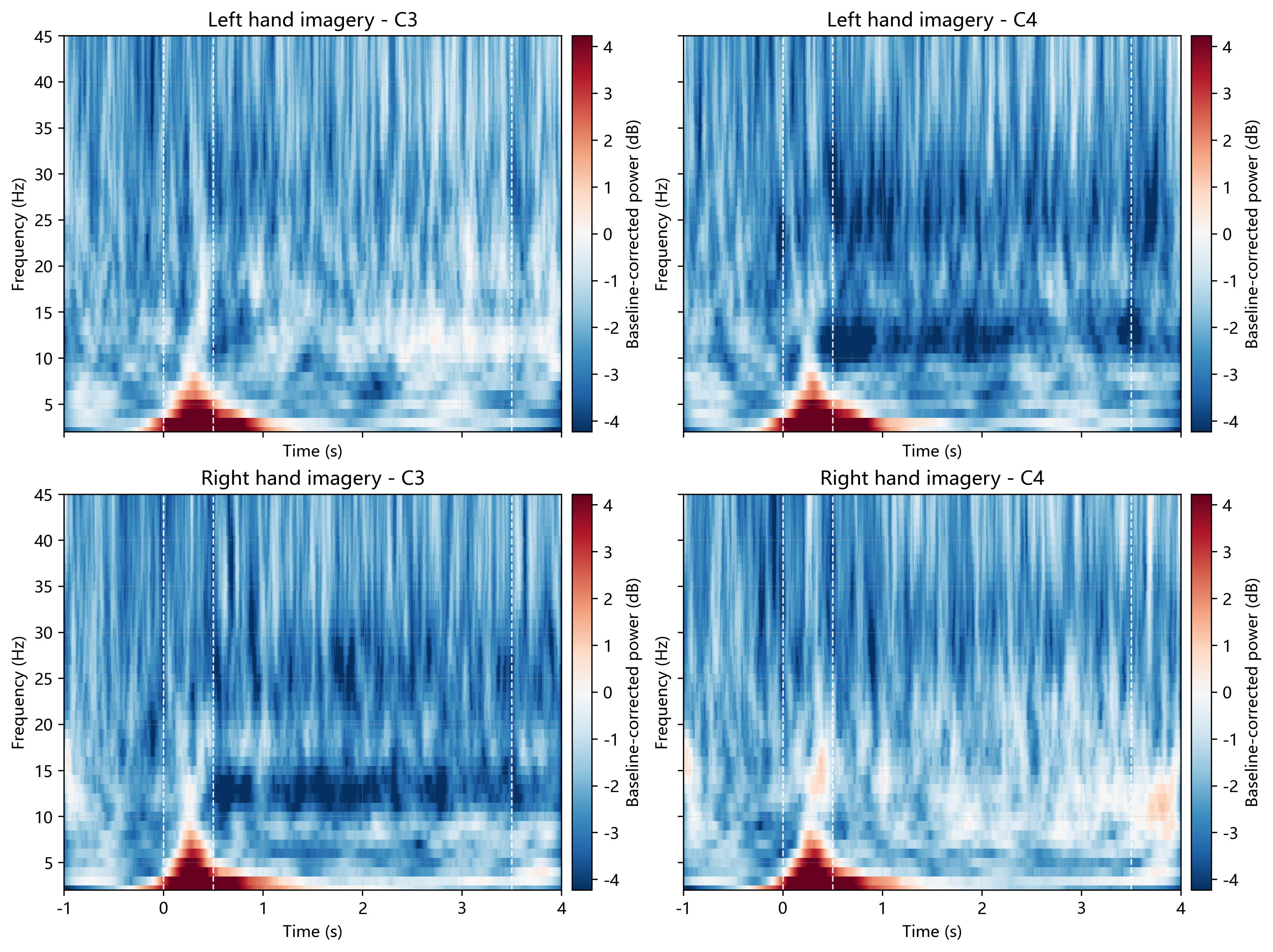
EEG Time-Frequency Analysis with OpenBMI project visual
Neuroscience / Signals Medical signal processing course project

EEG Time-Frequency Analysis with OpenBMI

A reproducible Python workflow for STFT, CWT, wavelet multiresolution, and OpenBMI motor imagery EEG ERD/lateralization analysis.

Role: Built and released the public workflow, regenerated English figures and report, and documented data/privacy constraints.

Methods: Fourier analysis, STFT parameter sweep, CWT, DWT multiresolution, baseline-corrected mu/beta ERD, C3/C4 lateralization

  • Compared Fourier spectra, STFT, CWT, and wavelet multiresolution on nonstationary synthetic signals.
  • Quantified STFT window-length and window-function tradeoffs in time/frequency resolution.
  • Computed baseline-corrected mu/beta ERD and C3/C4 lateralization for OpenBMI motor imagery EEG.
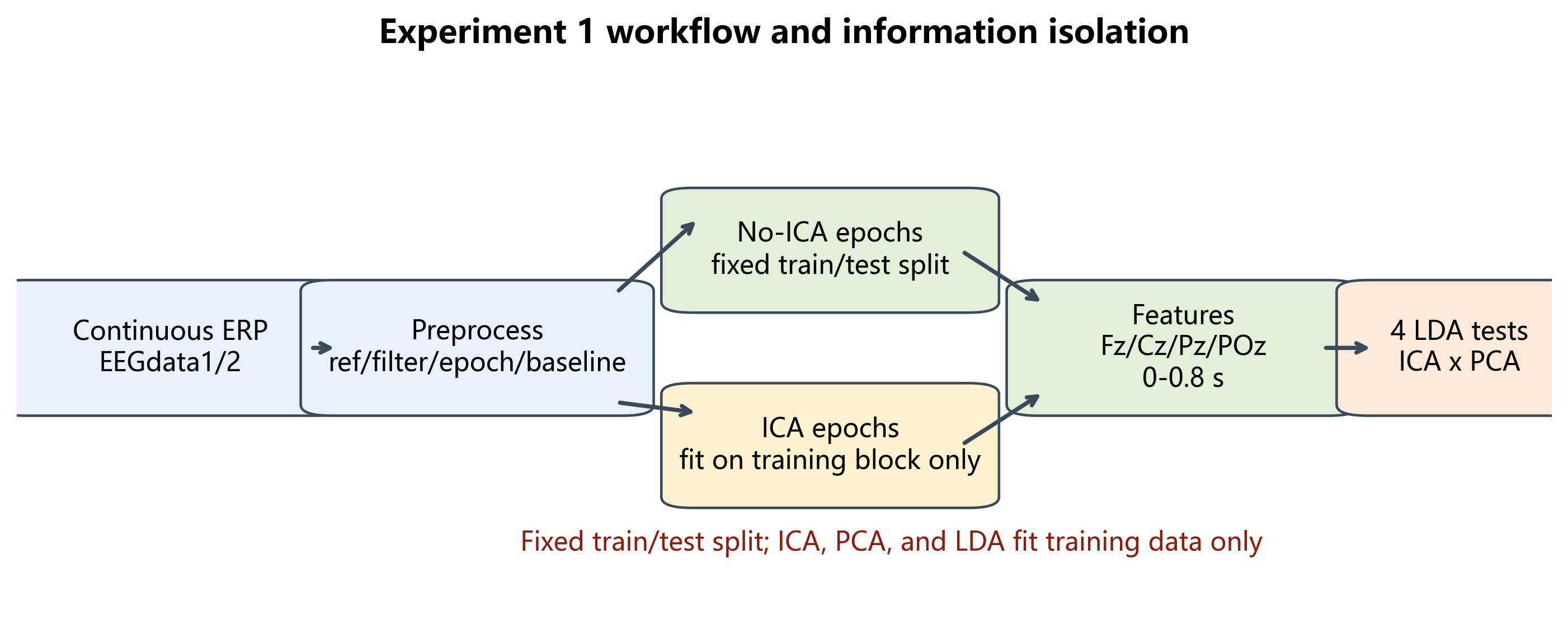
EEG Feature Enhancement and Single-Trial Classification project visual
Neuroscience / Signals Medical signal processing course project

EEG Feature Enhancement and Single-Trial Classification

A reproducible Python implementation of ERP ICA/PCA/LDA target detection and SSVEP TRCA single-trial EEG recognition.

Role: Implemented the public analysis workflow, generated English figures/tables/report, and added regression tests for split logic, PCA/LDA isolation, and TRCA behavior.

Methods: ERP preprocessing, ICA artifact inspection, PCA dimension reduction, LDA classification, SSVEP TRCA, leave-one-block-out validation

  • Compared ERP single-trial target detection under ICA/PCA/LDA conditions with strict train/test isolation.
  • Evaluated SSVEP TRCA using leave-one-block-out validation and reported the scope of within-subject generalization.
  • Included tests for data shape, split logic, PCA/LDA isolation, and TRCA behavior to keep the workflow reproducible.
EEG Spectral Estimation project visual
Neuroscience / Signals Reproducible lab project

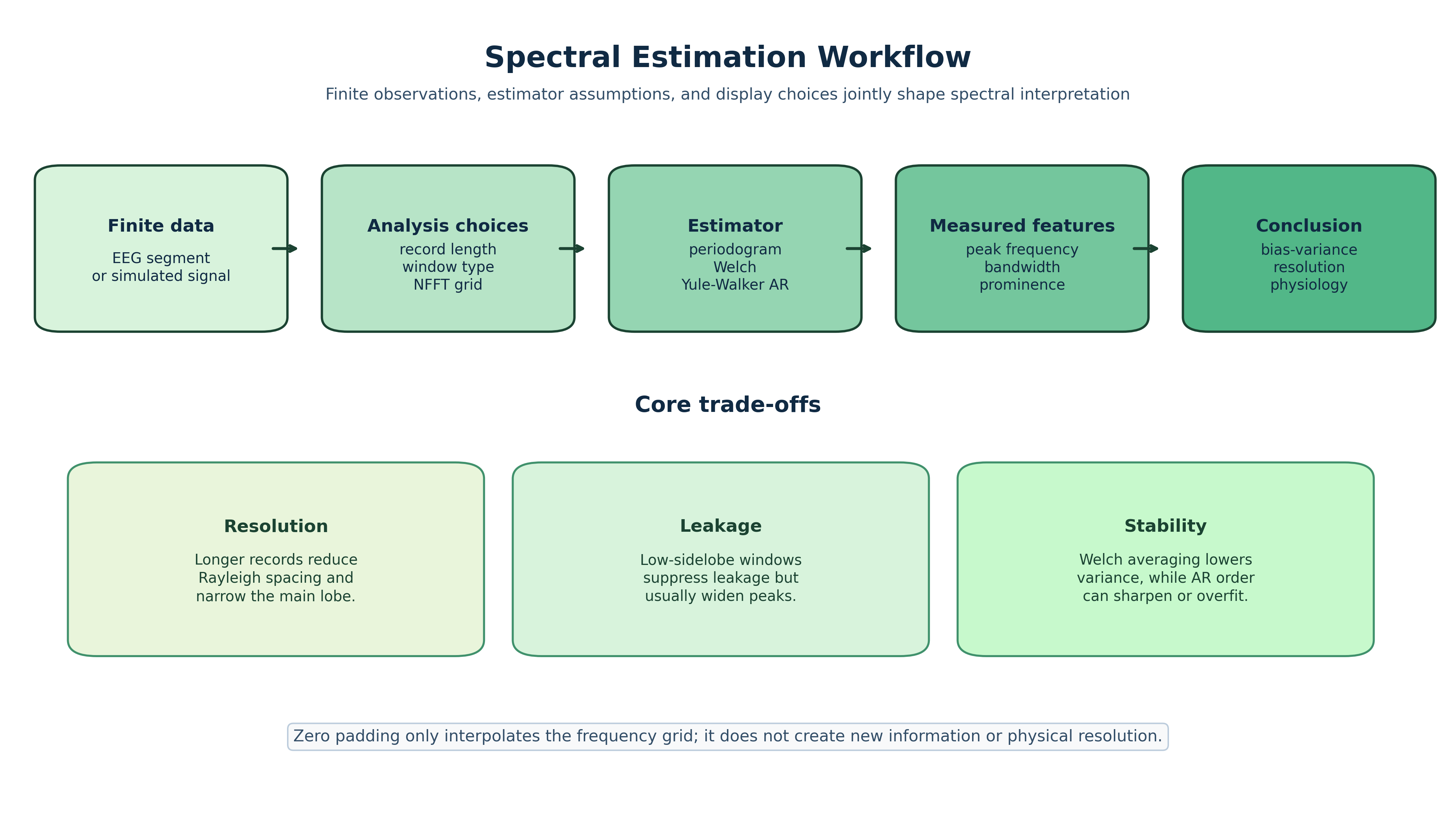
EEG Spectral Estimation

A reproducible study of classical and AR spectral estimators on synthetic signals and LEMON closed-eye resting-state EEG.

Role: Designed the experiments, implemented the analysis pipeline, produced report figures, and wrote the technical report.

Methods: FFT, Hamming periodogram, autocorrelation PSD, Welch PSD, Yule-Walker AR spectra, FPE order selection

  • Compared estimator bias, variance, leakage, resolution, and pseudo-peak behavior.
  • Connected signal-processing choices to interpretable EEG alpha-band analysis.
  • Maintained absolute one-sided PSD reporting in dB/Hz for reproducible comparison.
ERP Filtering and EEG Preprocessing project visual
Neuroscience / Signals Reproducible lab project

ERP Filtering and EEG Preprocessing

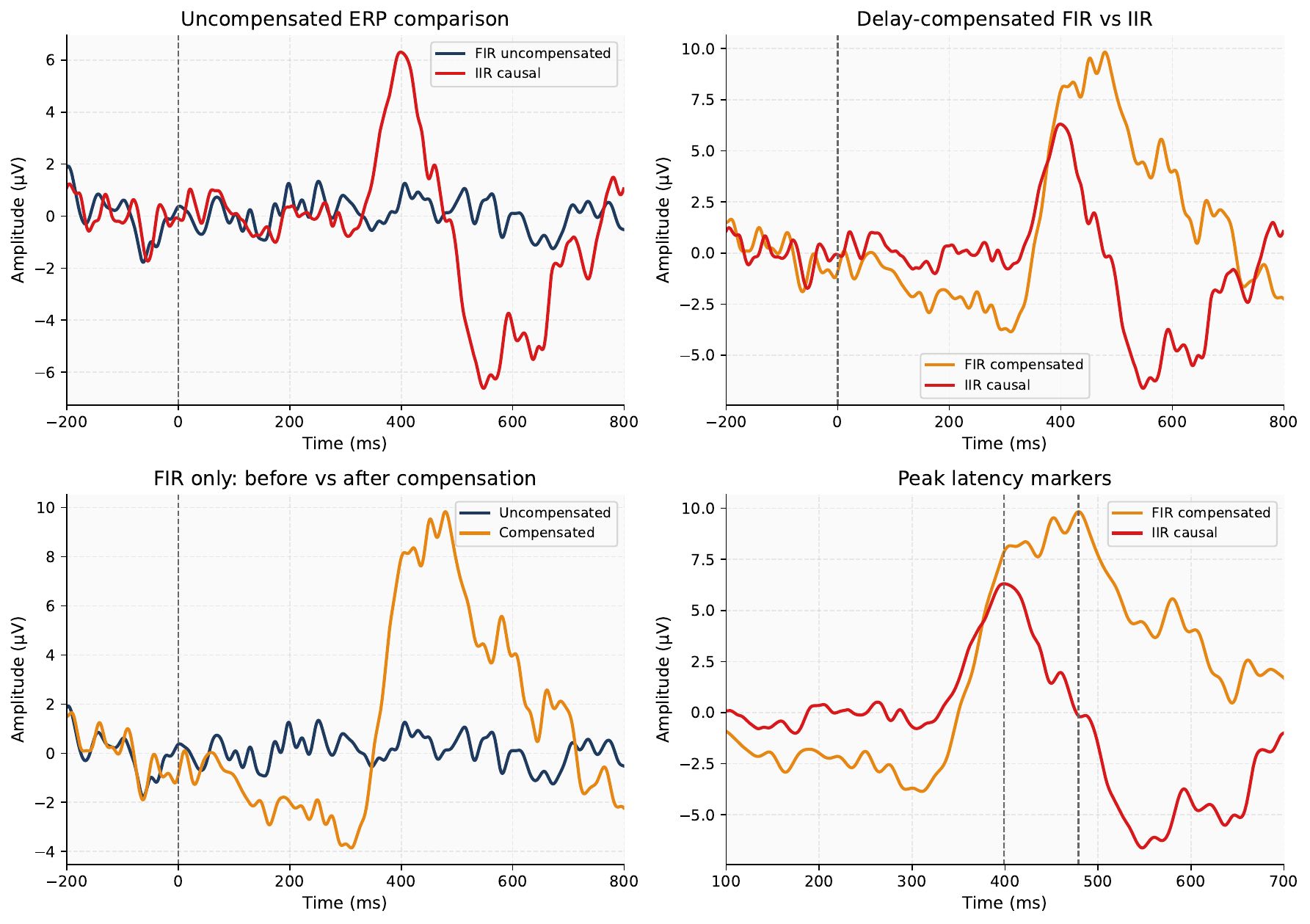
A complete ERP filtering study covering IIR/FIR filter design, EEG preprocessing, waveform interpretation, and bilingual reporting.

Role: Implemented filter comparisons, ERP analysis, quantitative summaries, and publication-style reports.

Methods: IIR/FIR filter design, zero-phase filtering, delay analysis, baseline drift suppression, ERP waveform comparison

  • Compared Butterworth, Chebyshev-I/II, and elliptic IIR filters under matched specifications.
  • Measured latency distortion from causal filtering and corrected interpretation with zero-phase filtering.
  • Used real ERP data to connect filter design to cognitive-neuroscience waveform analysis.
Brunel Balance Network project visual
Computational Neuroscience Computational neuroscience microproject

Brunel Balance Network

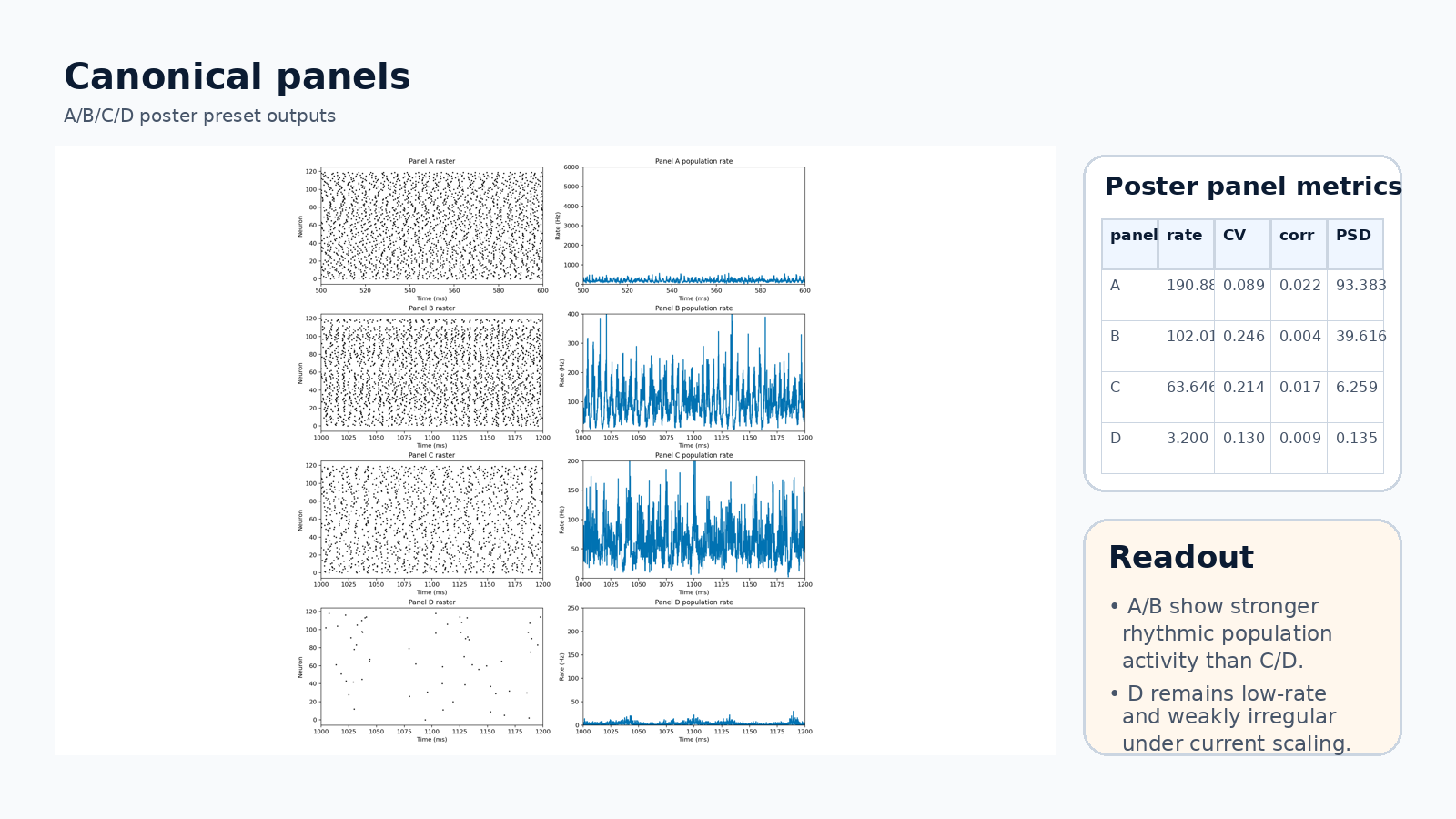
A Brian2 reproduction and analysis of canonical sparse excitatory/inhibitory spiking network regimes from Brunel 2000.

Role: Built the simulation workflow, generated canonical panels and sweeps, documented limitations, and packaged deliverables.

Methods: Leaky integrate-and-fire networks, E/I balance, parameter sweeps, population-rate analysis, acceptance checks

  • Reproduced multiple canonical population activity regimes with explicit configuration control.
  • Generated raster, population-rate, phase-diagram, and metric figures for presentation.
  • Recorded model-scaling and validation tradeoffs instead of hiding imperfect cases.
Neuro-AI / RL

Neuro-AI / RL

Nonholonomic Dead-End Escape with Deep RL project visual
Neuro-AI / Reinforcement Learning CSAI 2025 publication engineering

Nonholonomic Dead-End Escape with Deep RL

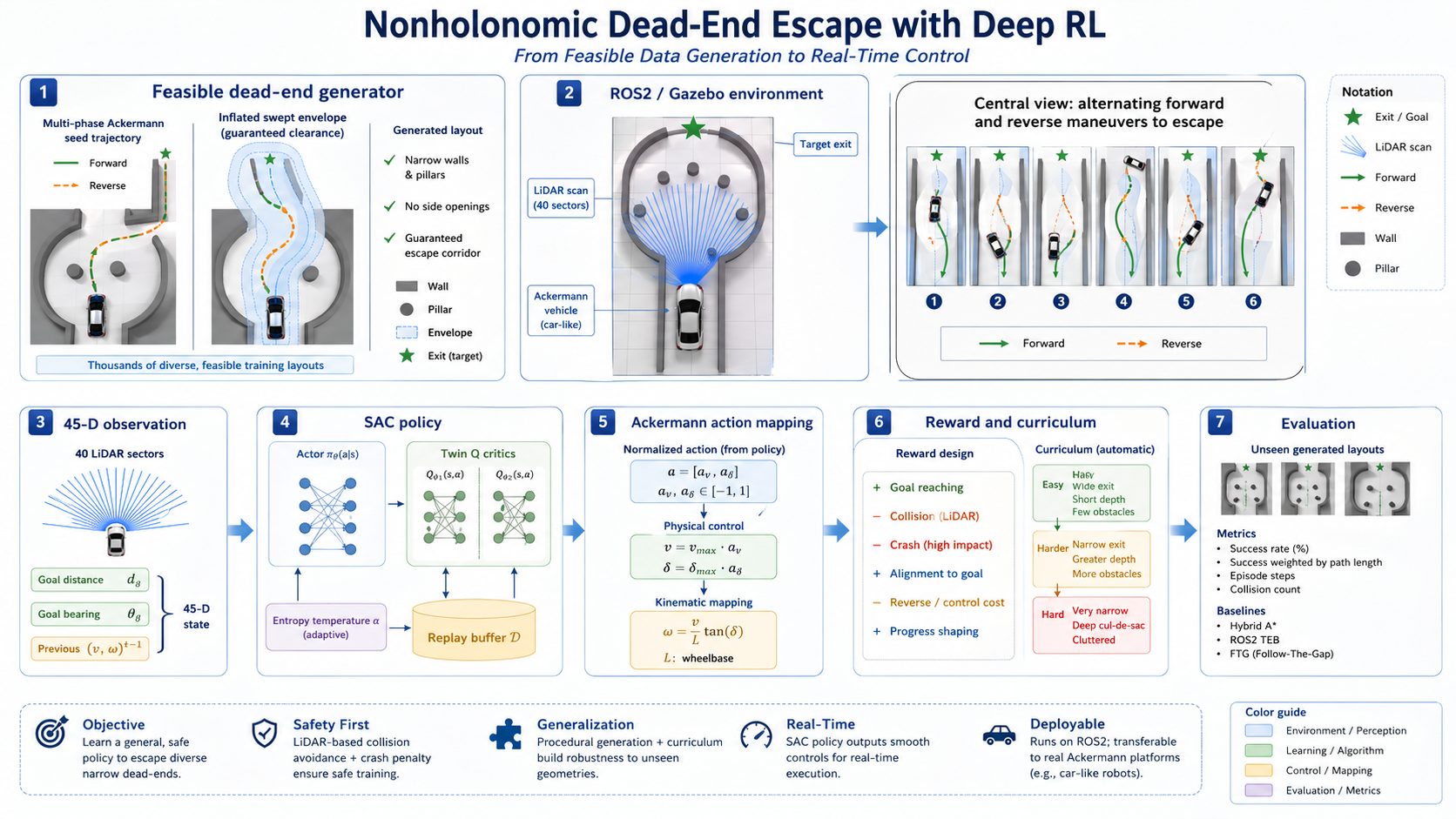
A SAC-based navigation and evaluation stack for Ackermann-style robots escaping narrow dead-end environments.

Role: Contributed to problem formulation, training/evaluation workflow, environment generation, and experimental engineering.

Methods: Soft Actor-Critic, ROS2/Gazebo simulation, nonholonomic constraints, procedural dead-end generation

  • Connected reinforcement learning with spatial planning under tight nonholonomic constraints.
  • Benchmarked learned policies against representative classical planners.
  • Became the formal CSAI 2025 conference paper now indexed with ACM DOI.
Applied ML / Systems

Applied ML / Systems

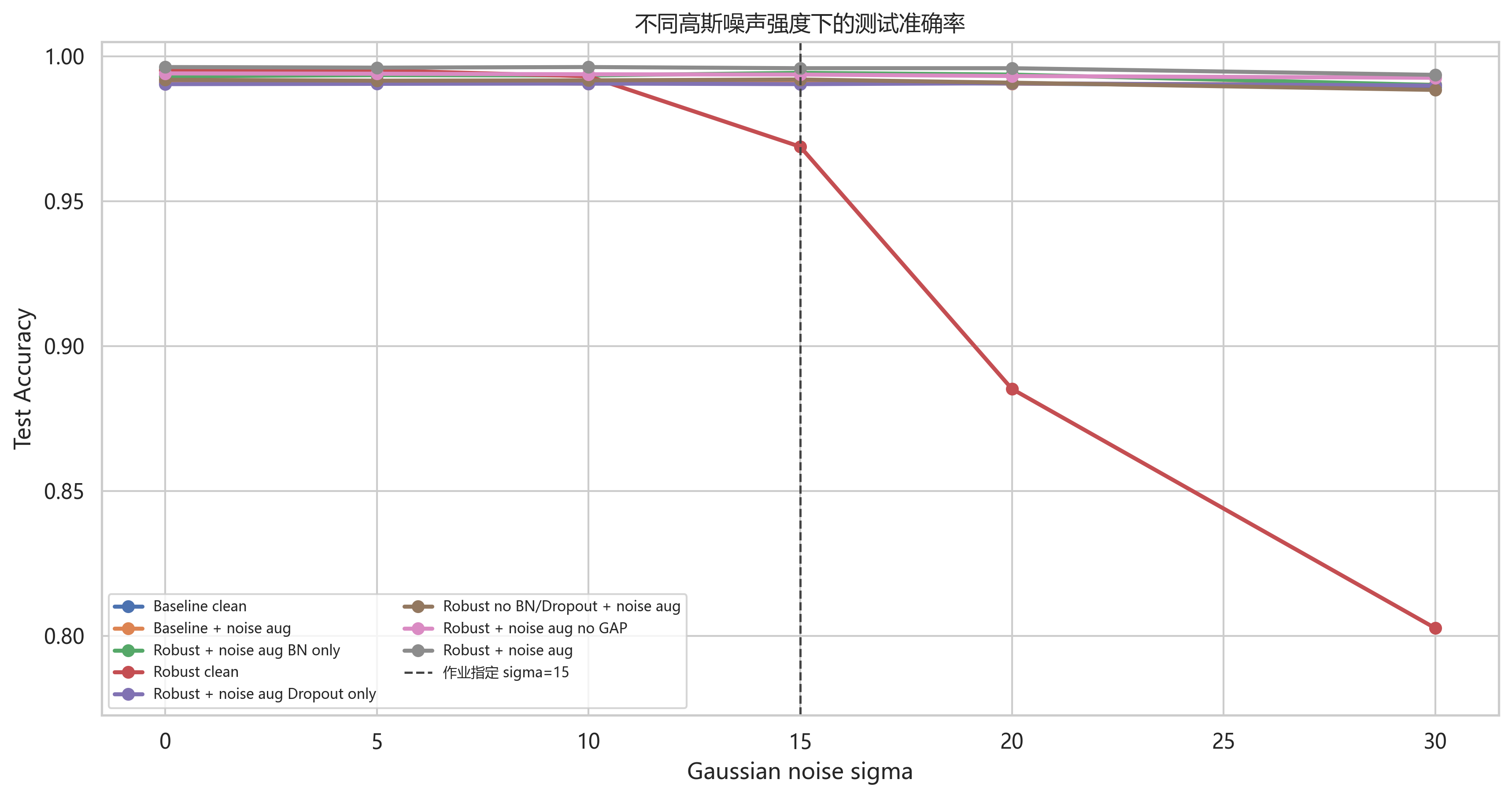
Deep Learning Exp2: MNIST Noise Robustness project visual
Applied ML / Systems Deep learning coursework project

Deep Learning Exp2: MNIST Noise Robustness

A reproducible PyTorch study of LeNet-style MNIST recognition, feature visualization, self-collected handwriting samples, and Gaussian-noise robustness.

Role: Built the experiment package, trained and evaluated baseline/robust CNN variants, generated figures/tables, and wrote the English report.

Methods: LeNet-style CNN, RobustNoiseCNN, feature-map and kernel visualization, noise augmentation, ablation, confusion matrices

  • Compared clean/noisy MNIST accuracy, robustness curves, confusion matrices, and seed-stability checks.
  • Evaluated 192 self-collected handwritten digit samples to expose a real domain gap.
  • Used ablation and failure-case analysis to diagnose where noise-robust training helps.
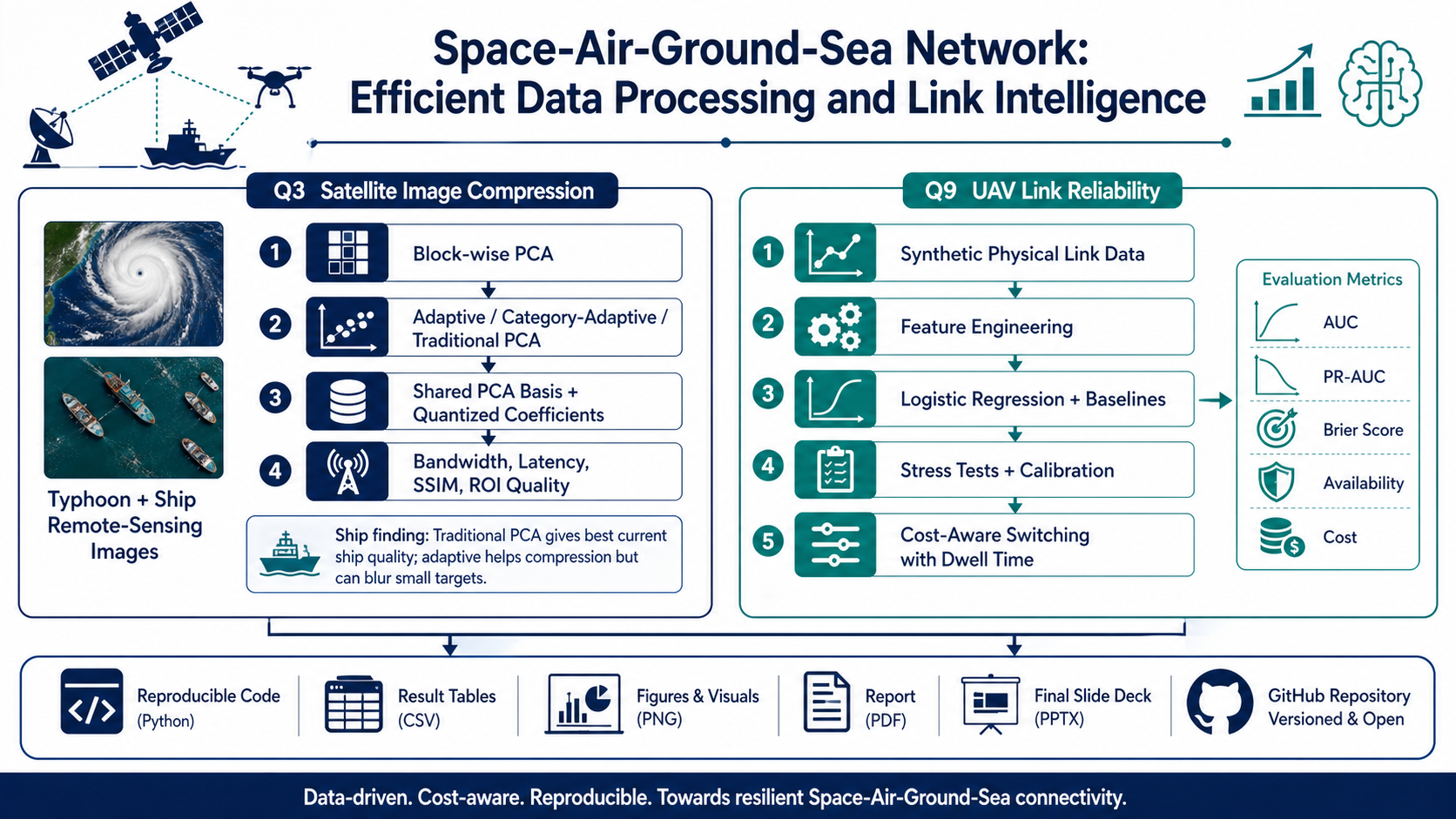
SAGIN ML: Satellite Link Optimization project visual
Applied ML / Systems Reviewed ML course project

SAGIN ML: Satellite Link Optimization

A Space-Air-Ground-Sea network project combining PCA-based satellite image transmission and cost-aware UAV link switching.

Role: Built the public English release, reproduced experiments, generated result tables/figures, and documented limitations.

Methods: Traditional/adaptive/category-adaptive PCA, shared-basis compression, ROI-aware ship analysis, logistic regression, stress tests, cost-aware switching

  • Connects machine learning with communication efficiency in satellite-UAV-ground-maritime scenarios.
  • Shows rigorous model comparison with compression quality, calibration, stress tests, and switching cost.
  • Documents a negative finding: adaptive PCA can blur small ship targets despite improving compression.
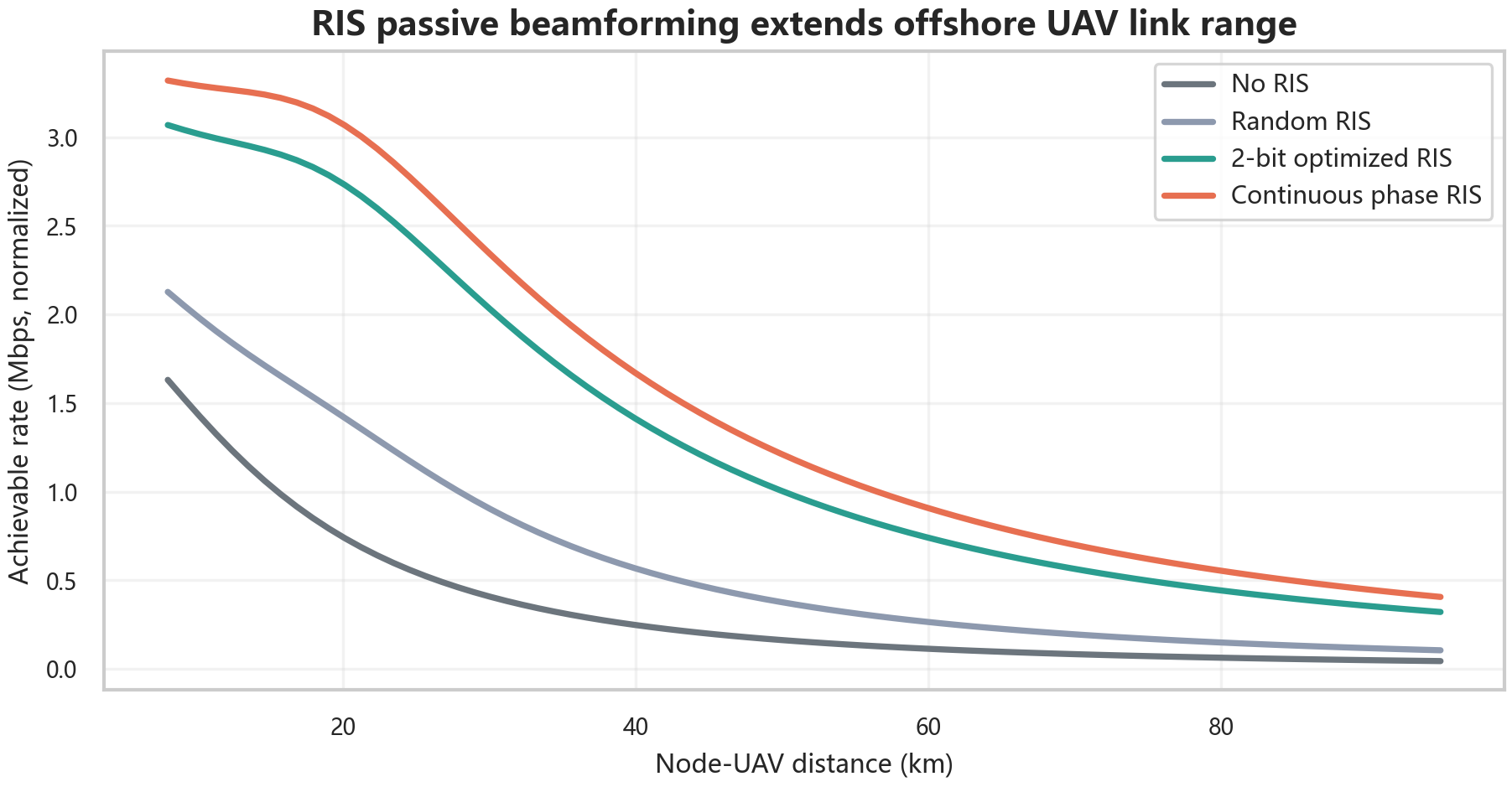
Q-RIS-UAV Secure Energy Optimization project visual
Applied ML / Systems Secure communication optimization project

Q-RIS-UAV Secure Energy Optimization

A public academic report and reproducible simulation for QKD-protected RIS-UAV offshore monitoring with secure energy-efficiency optimization.

Role: Built the sanitized public release, scenario simulation, optimization pipeline, generated slide deck, and verification checks.

Methods: Dinkelbach transformation, alternating optimization, CVXPY resource allocation, RIS phase quantization, SCA trajectory update, QKD key constraints

  • Formulated weighted secure data energy efficiency under UAV, RIS, QKD, power, bandwidth, and coverage constraints.
  • Integrated typhoon context, offshore wind infrastructure, coastline data, and magnetic anomaly priority modeling.
  • Produced reproducible simulations, RIS evidence, robustness/ablation/Pareto analysis, and a verified 77-slide public deck.
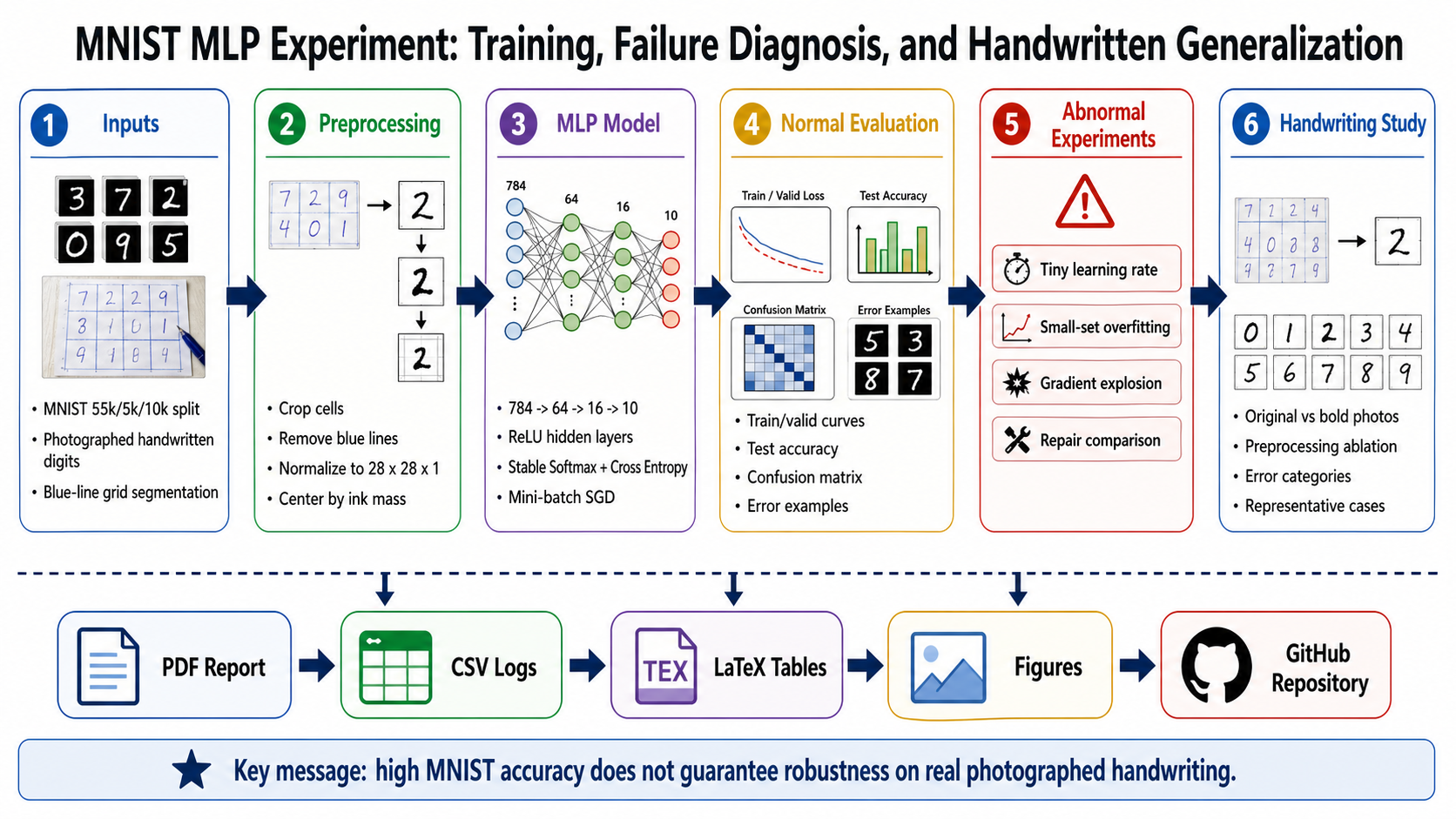
MNIST MLP Experiment Diagnosis project visual
Applied ML / Systems Deep learning experiment and diagnosis

MNIST MLP Experiment Diagnosis

A complete NumPy MLP project for MNIST training, abnormal-case diagnosis, repair experiments, and photographed handwriting generalization.

Role: Implemented experiment pipelines, generated diagnostics, processed handwritten sheets, and built the final report assets.

Methods: MLP training, confusion matrix analysis, learning-rate failure, overfitting diagnosis, gradient explosion repair, preprocessing ablations

  • Demonstrates quantitative debugging of training failures instead of only reporting final accuracy.
  • Shows that high MNIST accuracy does not guarantee robustness on photographed handwriting.
  • Connects preprocessing, representation limits, and model architecture to real error modes.
Robotics / Control

Robotics / Control

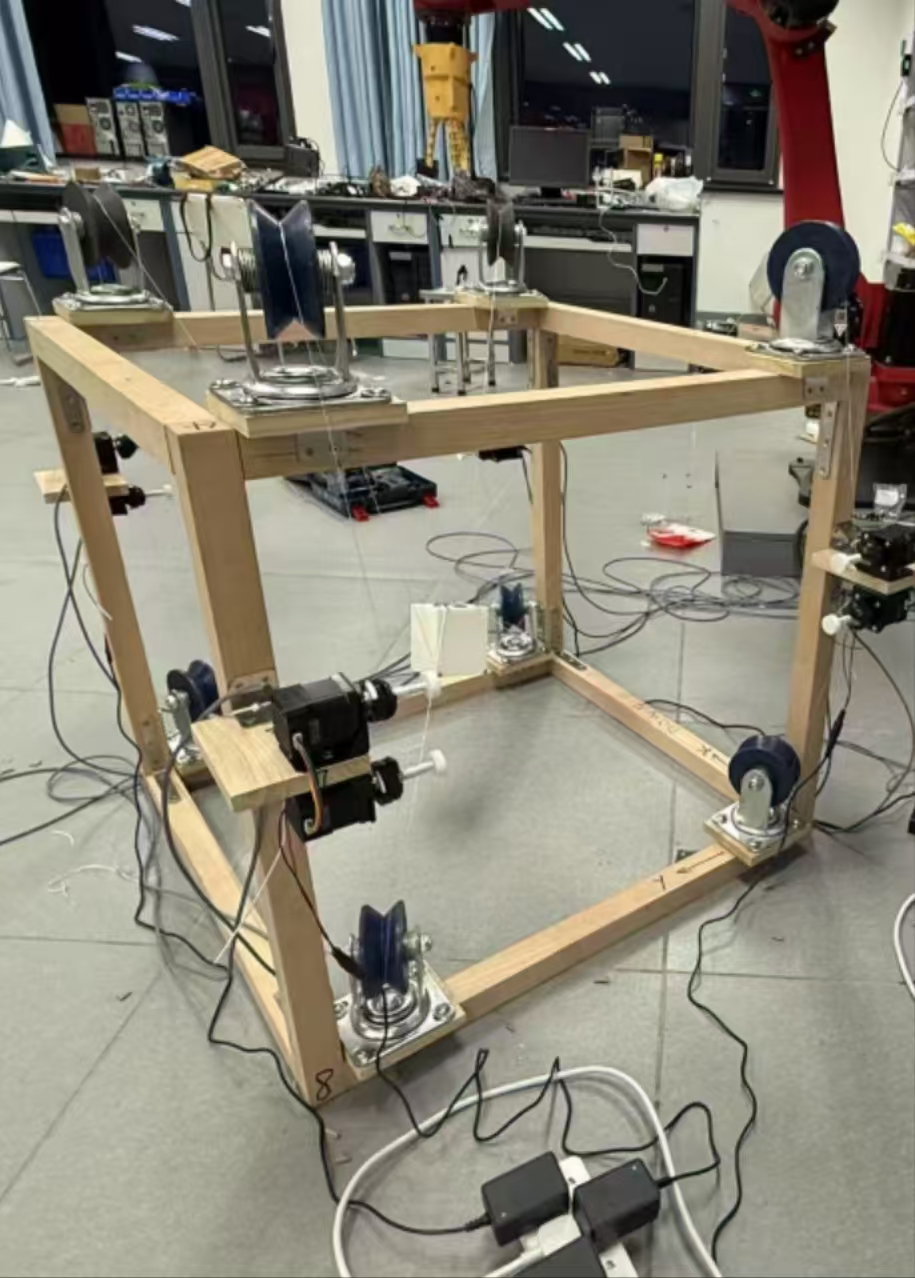
Eight-Cable-Driven Parallel Robot project visual
Robotics / Control Full-stack robot project

Eight-Cable-Driven Parallel Robot

A desktop-scale 6-DOF cable-driven parallel robot built from mechanism design through modeling and control.

Role: Led CAD, kinematics/dynamics modeling, motor-driver configuration, PC control, serial communication, and demos.

Methods: Inverse kinematics, Jacobian analysis, tension optimization, trajectory planning, embedded motion control

  • Shows the engineering foundation behind later embodied-intelligence interests.
  • Combined mathematical modeling, mechanical design, electronics, and control software.
  • Built reproducible documentation with visuals, equations, and demos.
Systems / Hardware

Systems / Hardware

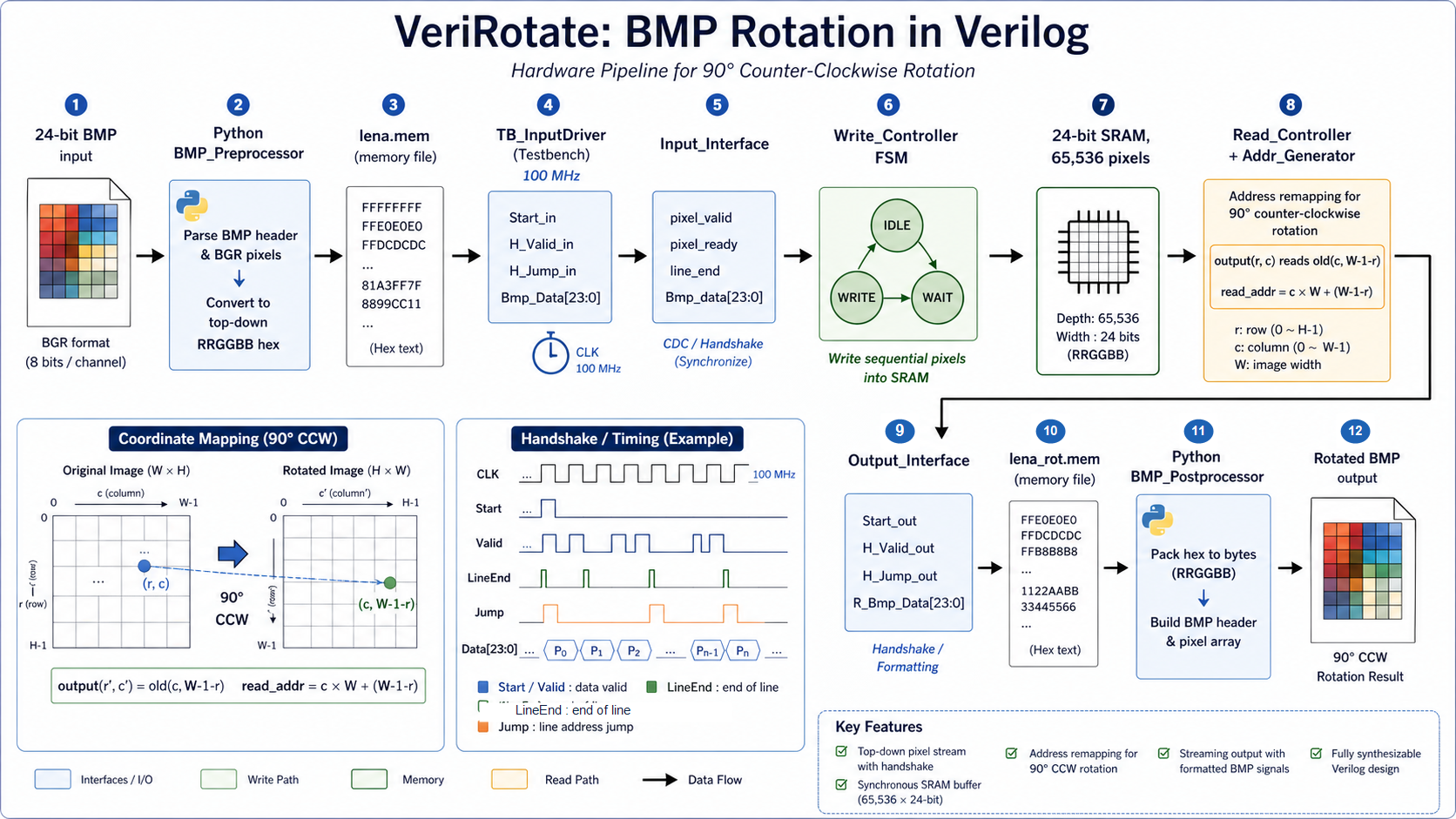
VeriRotate: BMP Rotation in Verilog project visual
Systems / Hardware Digital systems project

VeriRotate: BMP Rotation in Verilog

A pure-hardware pipeline for rotating 24-bit BMP images 90 degrees counter-clockwise.

Role: Designed RTL modules, address mapping, SRAM model, testbench, and Python pre/post-processing scripts.

Methods: Streaming RTL pipeline, synchronous SRAM, finite-state machines, image address transformation

  • Demonstrates low-level implementation ability beyond high-level ML scripting.
  • Covers full verification flow from input driver to reconstructed BMP output.
  • Strengthens the hardware/systems side of an interdisciplinary Neuro-AI profile.